
"Kenyan washed process"
800 article(s) found

How does Kenyan Micro-batch Series KarogotoAA Coffee affect the Flavor of Kenyan Nyeri Coffee
Professional coffee knowledge exchange more coffee bean information please follow the coffee workshop (Wechat official account cafe_style) the Kenyan boutique coffee industry is different from the general, mostly in the form of a combination of small farmers, wet processing plants and cooperatives, farmers will send the harvested coffee cherries to nearby processing plants or cooperatives in the shortest possible time. At the same time, the cooperative will send people on a regular basis.

Why is Kenyan coffee getting more expensive but less flavorful than it used to be? Kenya Marseilles aa coffee beans are boiled
Professional coffee knowledge exchange more coffee bean information please follow the coffee workshop (Wechat official account cafe_style) Kenya coffee producing area information Kenyan government officials said on December 8, 2020, Kenya's coffee production is expected to be 4000 to 40, 000 tons less than 2019 in 2020, this reduction will not have an impact on Kenya's coffee exports in 2021. Agriculture and fishing in the country
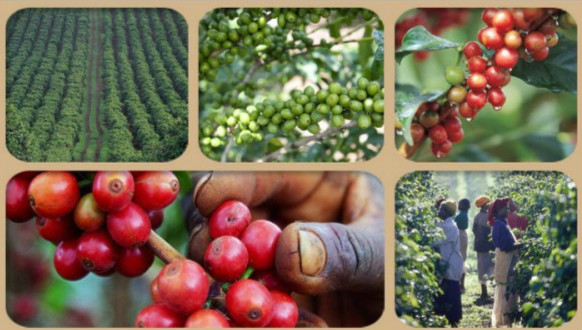
Kenya Coffee Raw Bean supply aa Coffee Raw Bean Manor boutique Yala Manor Coffee Bean Family Tuji processing
Kenyan coffee is mostly grown at an altitude of 1500m, 2100m, and is harvested twice a year. Its main feature is a distinct fruit aroma, the common fruit aroma is citrus. Kenyan coffee has a multi-layered taste and juice acidity, perfect grapefruit and wine flavor, moderate mellow, is the favorite of many people in the coffee industry. Kenya Coffee borrows Hollywood movies

Introduction to the characteristics of the taste-rich Kenyan boutique coffee bean flavor manor
Don't underestimate the small farmers in Kenya, they are just like ants, and their overall production capacity is higher than that of large farms, about six to four, which is quite rare in bean-producing countries. Kenyan coffee is widely appreciated by connoisseurs, thanks in large part to small farmers guarding the foothills in order to grow high-quality coffee. In addition, Kenya beans must have a strict grading system, and the coffee beans taken out by the washing plant are large.

Description of the characteristics and taste of high-quality coffee beans in Jinchu Coffee Variety producing area in Kenya
There are two types of coffee farms in Kenya. One is a large plantation that covers an area of more than five acres, but the average elevation is low. In the case of Kenyan coffee, the coffee beans of the large farms are of medium quality. The best Kenyan beans come from small farms, most of which are located in the foothills or volcanic slopes above 5,000 to 6,000 feet. Each small farmer has a capacity of only 20 to 70 bags per season.
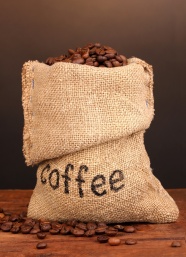
The origin of Kenyan coffee beans the flavor of Kenyan coffee
Kenyan Coffee-an atlas of Kenyan coffee of origin entered Kenya in the 19th century, when Ethiopian coffee drinks were imported to Kenya through southern Yemen. But it was not until the early 20th century that the bourbon was introduced by the St. Austen Mission (St.AustinMission). Kenyan coffee is mostly grown at an altitude of 1500Murray 2100 meters, with two harvests in a year.

Taste of Kenyan Sassini Manor Coffee Fine Coffee beans shallow and medium roasted Kenyan Coffee
Kenya is bordered to the north by Ethiopia, the origin of Arabica coffee trees, but it was not until the beginning of the 20th century that coffee cultivation began. In the 19th century, missionaries introduced Arabica trees from the leaves, but did not plant them in large quantities. It was not until 1893 that coffee was cultivated on a large scale because of the introduction of Brazil's ancient bourbon seeds. That is to say, Kenyan coffee is of Brazilian origin, because of water.

Introduction to the characteristics of the Fine Coffee Flavor Manor in Kenya the Central Dashan area of Nyeri
Kenya has two coffee cherry production seasons a year. The main season is from October to December and the secondary season is from April to June. As a loyal fan of Kenyan coffee, we sugar bean boutique coffee certainly will not miss this delicious coffee. At the end of August, we arrived a new batch of new Kenyan beans in this season, from the Kenyan Gatuya washing station. The washing station was established in 1962 and currently cooperates with about 1.

Variety, brand recommendation and manor of Carragoto boutique coffee beans from AA in Lauri, Kenya
For the exchange of professional baristas, please pay attention to the coffee workshop (Wechat official account cafe_style) AA Karoguto boutique coffee bean species, brand recommendation and manor Karoguto in Kenya, this Kenyan Carrogoto AA from Neri, Kenya, this amazing coffee variety, grows on a plateau at an altitude of 1700 meters above sea level, and is grown on only small coffee farms.

Don't underestimate Kenyan coffee.
Kenya lies to the north of Ethiopia, the origin of Arabica coffee trees, but it was not until the early 20th century that it was engaged in coffee cultivation. In the 19th century, missionaries introduced Arabica trees from Yemen, but did not plant them in large quantities. It was not until 1893, when Brazil's ancient bourbon seeds were introduced, that coffee was cultivated on a large scale. That is to say, the current Kenyan coffee has Brazilian ancestry.
Kenyan coffee taste Kenyan coffee characteristics of Kenyan coffee introduction of Kenyan coffee
Kenya is bordered to the north by Ethiopia, the origin of Arabica coffee trees, but it was not until the beginning of the 20th century that coffee cultivation began. In the 19th century, missionaries introduced Arabica trees from the leaves, but did not plant them in large quantities. It was not until 1893 that coffee was cultivated on a large scale because of the introduction of Brazil's ancient bourbon seeds. That is to say, Kenyan coffee is of Brazilian origin, because of water.
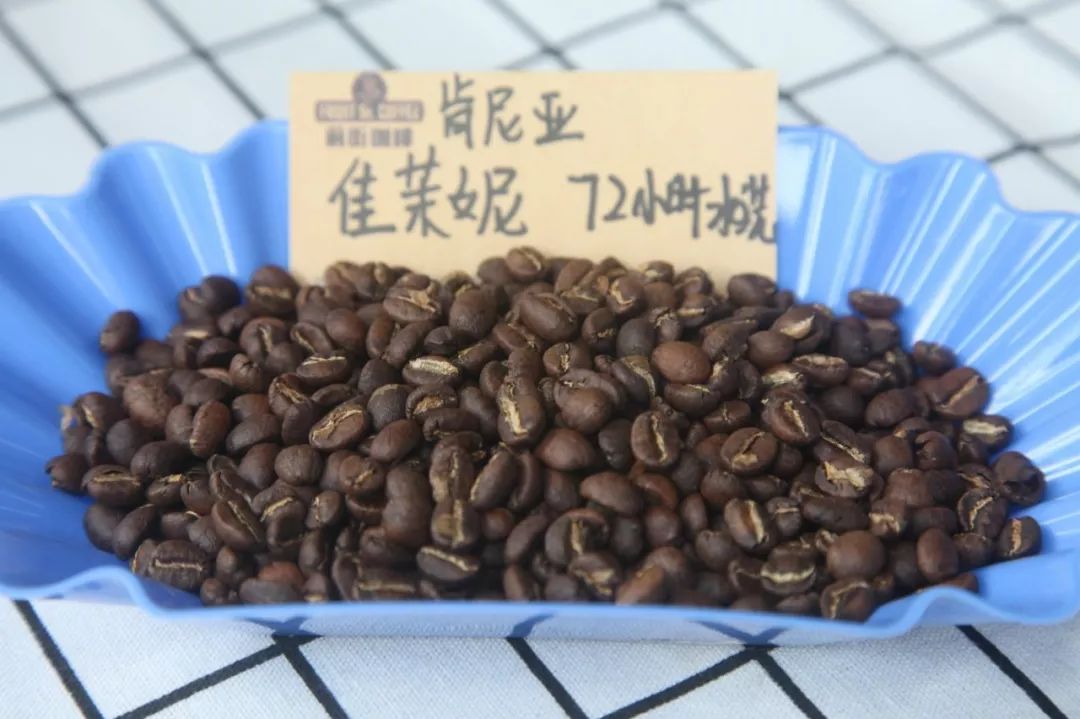
Orange-scented Kenyan Coffee [Kenya Jiamoni] story baking analysis and cooking suggestions
Professional coffee knowledge exchange more coffee bean information please follow the coffee workshop (Wechat official account cafe_style) [Kenya Jiamoni exquisite 72-hour washing] country: Kenya region: Kilinaga Kirinyaga altitude: 1700-1800m soil: volcanic soil species: sl-28,sl-34 treatment: 72 hours washing 01 | the processing plant introduces Kiangombe workers.

Kenya washed AA grade Klinga producing area Kabarekong fish processing plant fine coffee bean flavor taste
Flavor Description: Intense dry and wet aromas of lemon and plum. When lightly roasted, it has a variety of amazing aromas such as floral, lemon, etc. It also has sweet and sour juicy flavors such as grapefruit green tea and citrus juice. Slightly roasted, it has various flavors such as honey and black plum in the pot. The aftertaste is a lot of sweet and sour taste of green tea.

African Kenyan boutique coffee beans, boutique coffee Kenyan coffee from Ethiopia
Kenyan coffee is mostly grown at 15002100 meters above sea level and is harvested twice a year. Its main feature is a distinct fruit aroma, the common fruit aroma is citrus. Kenyan coffee has a multi-layered taste and juice acidity, perfect grapefruit and wine flavor, moderate mellow, is the favorite of many people in the coffee industry. Kenyan Coffee borrows Hollywood movies.
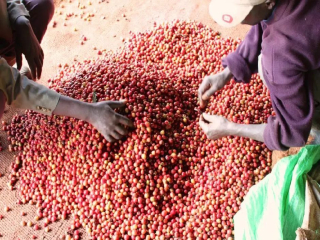
How about Kenyan AA coffee? Flavor and taste characteristics of Kenyan coffee beans
Professional baristas please follow the coffee workshop (Wechat official account cafe_style) Kenya AA coffee is one of the rare good coffee, it is famous for its strong aroma and acidity balance, loved by many glutton. It tastes perfect and balanced, and has a wonderful and strong flavor.

Kenyan Coffee Farm and Cooperative processing Plant list Starbucks which Kenyan Coffee is?
Professional baristas exchange please pay attention to the coffee workshop (Wechat official account cafe_style) Kenya micro-batch series Kenya Micro Lot Kenya boutique coffee industry is different from the general, mostly in the form of a combination of small farmers, wet processing plants and cooperatives, farmers will harvest coffee cherries, in the shortest possible time to the nearby processing plant or cooperative. meanwhile

Kenya washing AA grade Klinga producing area Kabarekong fish processing plant order baking boutique coffee
The fresh coffee of this batch of Kongyu AA was picked and processed by 250 farmers in Kongyu Processing Plant under Kabare Farmers Cooperative. Coffee is peeled, fermented and washed in nearby river water and dried on African drying beds. Each harvest season, farmers will process nearly 300 tons of fresh coffee. After processing, it will participate in the three weekly elections in Nairobi
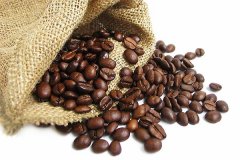
Kenyan boutique coffee taste characteristics of Kenyan coffee flavor characteristics of Kenyan coffee
The characteristics of Kenyan Coffee: Kenyan Coffee has multi-layered taste and acidity of juice, perfect grapefruit and wine flavor, moderate mellow. Processing: washing method. Location: Kenya is located on the equator on the Indian Ocean coast of east-central Africa, south of Ethiopia. Similar to coffee: Kenya Coffee is most similar to Isabia Stammer Coffee. Except for the summer pavilion ensemble.

Introduction to the varieties of coffee beans produced by grinding scale and regional treatment in Berman Manor, Kenya
There are two types of coffee farms in Kenya. One is a large plantation that covers an area of more than five acres, but the average elevation is low. In the case of Kenyan coffee, the coffee beans of the large farms are of medium quality. The best Kenyan beans come from small farms, most of which are located in the foothills or volcanic slopes above 5,000 to 6,000 feet. Each small farmer has a capacity of only 20 to 70 bags per season.

Kenyan washed AA grade kringa producing area Kabarekong fish flavor characteristics, producing area and brewing parameters
Professional barista exchanges, please pay attention to coffee workshop (Weixin Official Accounts cafe_style ) According to SL laboratory botanists, SL28 and SL34 are genetic variants. SL28 has a mixed lineage of French missionaries, mocha and Yemeni tibica. SL28 was bred to produce high quality, pest resistant coffee beans in large quantities. Although later SL2